The Octopus
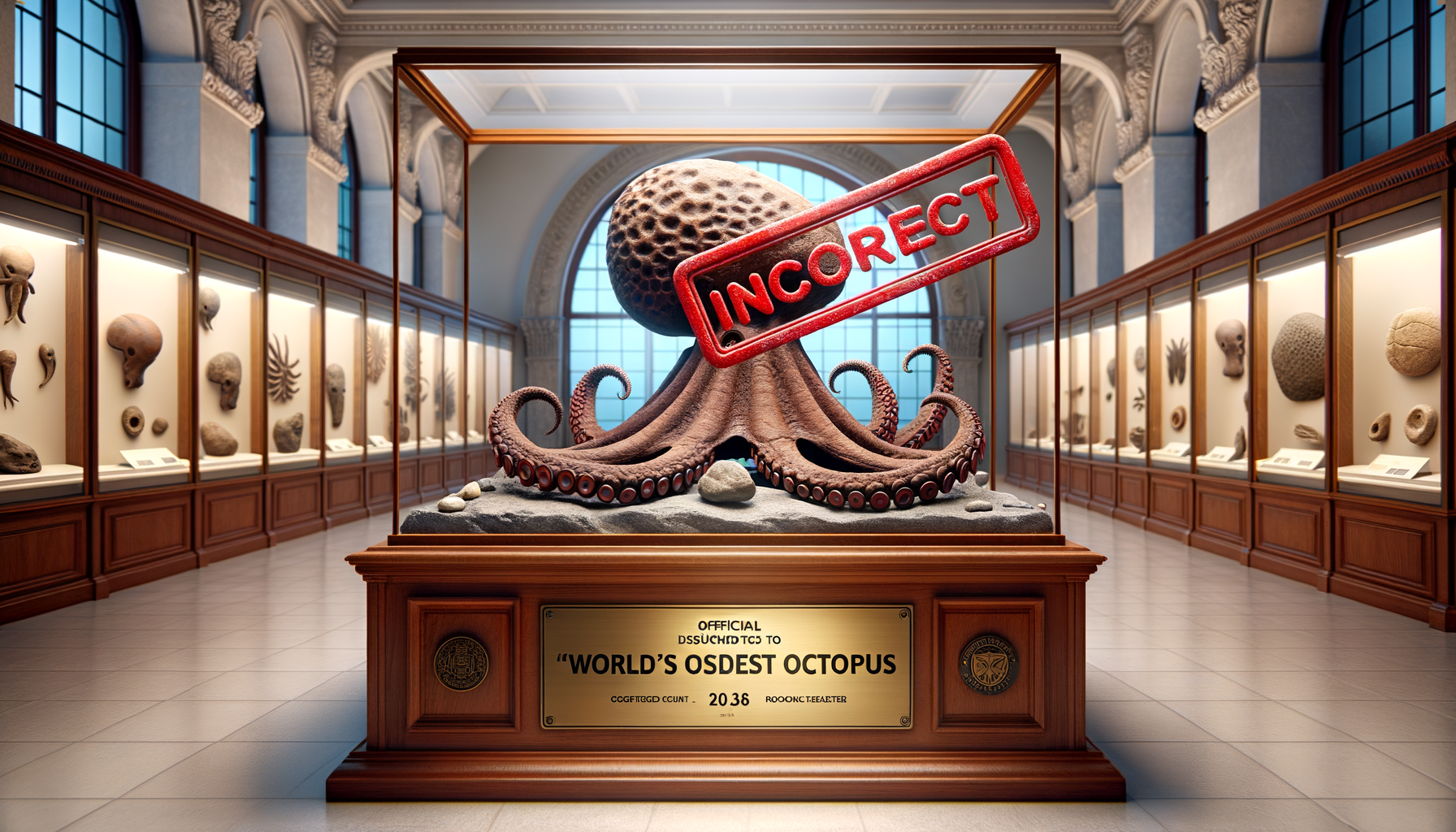
For approximately thirty years, a 300-million-year-old fossil called Pohlsepia mazonensis held the Guinness World Record for Oldest Octopus. It was in the book. Under octopus. Officially.
It was not an octopus.
Scientists announced this on April 8, 2026, in the Proceedings of the Royal Society B. Using synchrotron imaging — a technique that can detect structures too small to see with any conventional method — researchers found tiny teeth inside the fossil. Octopuses do not have teeth like this. Things related to modern Nautilus do.
(The Nautilus has an external shell, multiple tentacles, and a long history of not being confused with other animals. It has not released a statement about the situation.)
The misidentification traces back to something that happened 300 million years ago. As Pohlsepia's body decayed before being fossilized, it changed shape in ways that made it look like an octopus when compressed into rock. This is a form of evidence tampering that predates courts, lawyers, and the concept of evidence by a significant margin.
The animal was classified as an octopus in the 1980s. It held the record for decades. Researchers cited it in papers about octopus evolution. It appeared in textbooks. The fossil was not consulted during any of this. It had been in rock since before fish existed.
The Guinness Book of World Records has a process for correcting records. It has not announced whether this one qualifies for that process. The category may need to be renamed. The current frontrunner for Actual Oldest Octopus is believed to be something from the Jurassic Period, which has presumably been notified.
What nobody has explained is why the record was not listed as "Oldest Thing That Looked Like An Octopus While Fossilizing." That category remains empty. It would currently have no competition.