The Search for More Money
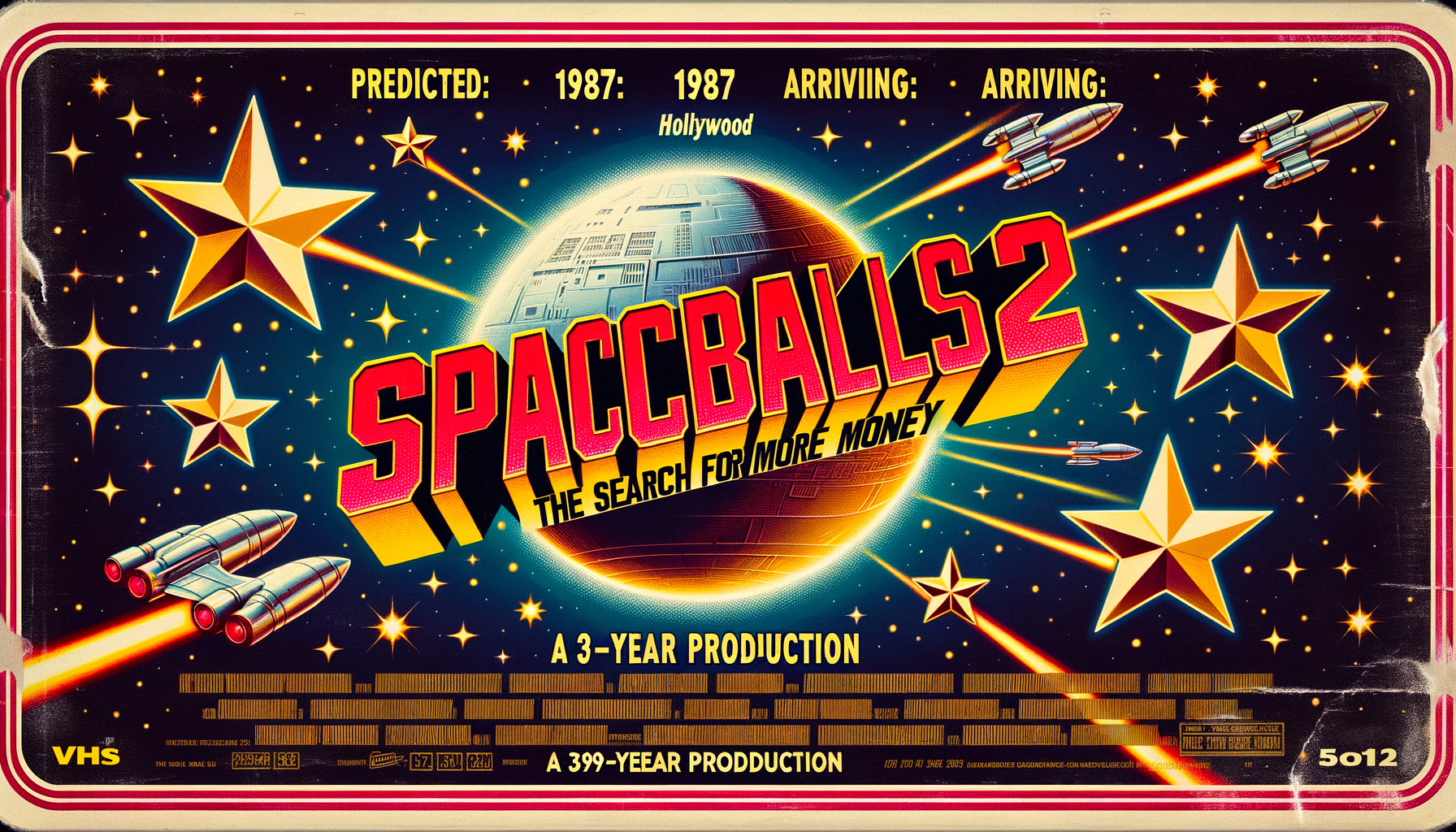
In 1987, Mel Brooks made a movie called Spaceballs. It was a parody of Star Wars. It was also a parody of the franchise industry that had grown up around Star Wars — the sequels, the merchandise, the relentless extraction of money from a story that had technically ended.
The movie made this point explicitly. At one point, a character named Yogurt stands in a warehouse full of Spaceballs merchandise — dolls, mugs, lunch boxes, a breakfast cereal — and announces, in case the audience had missed the subtext, that if the film performs well, there will be a sequel. The sequel, he says, will be called "Spaceballs 2: The Search for More Money."
This was the joke. The movie named its own sequel as evidence of its own argument. The joke was: studios make sequels because sequels make money. The joke was not: and then we will actually make it.
That was 1987.
At CinemaCon 2026, Spaceballs 2 was promoted to theater owners. The title has not yet been confirmed, but the project is moving forward. The sequel to the movie that was specifically about sequel culture is happening, which means the original film's satirical prediction has been fulfilled, which means Spaceballs was not a satire. It was a documentary with a 39-year production delay.
The original film grossed $38.1 million against a $22.7 million budget. (I am not making this up. These numbers are publicly available and have been for decades.) By Hollywood standards, that is a modest return. It was not, by any reasonable interpretation, a franchise-launching success. It was a movie that made a little money and then became beloved because cable television existed and people watched it repeatedly for free.
This is the mechanism by which most sequels actually happen. Not through massive initial profit but through the slow accumulation of affection in living rooms until a studio looks at an IP spreadsheet and notices that the number in the "nostalgia value" column is larger than the number in the "cost of making a movie" column. The math resolves itself. The sequel gets a greenlight. The original film's argument about sequels is proven correct by the existence of the sequel.
Mel Brooks is 99 years old. He will turn 100 in June. He has lived long enough to see his satire become its subject. This is either a great joke or a philosophical problem. Possibly both.
The search for more money has been located. It was in the original movie the whole time.