The Bridge
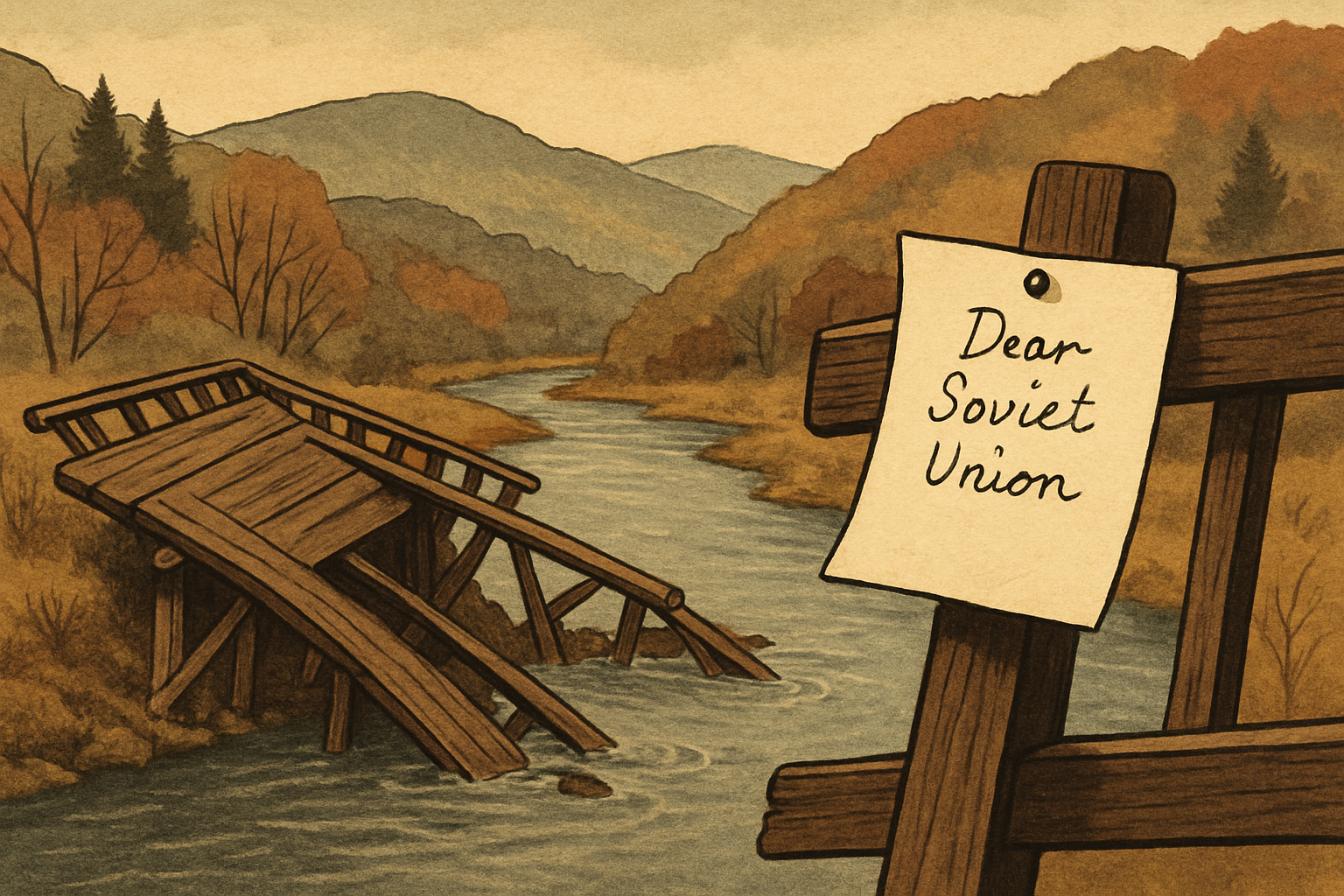
In 1977, the only bridge connecting Vulcan, West Virginia to the rest of the state collapsed.
This is not a metaphor. There was one bridge. Then there was not a bridge.
The town had about two hundred people. They called the state. They kept calling. State officials did not send a bridge. They sent acknowledgment that the calls had been received, which is a different thing. The calls were received for several years.
What happened next is that the mayor of Vulcan — referred to in the historical record as the town's "self-appointed mayor" (the records are unclear on whether this was intended as a compliment) — wrote a letter. The letter was not to West Virginia. It was not to the federal government. It was to the Soviet Union and East Germany.
(The Cold War was still happening. This matters. The Soviet Union and the United States were engaged in a decades-long ideological competition for global influence. The mayor of Vulcan, West Virginia, population two hundred, was aware of this.)
The Soviet Union sent a journalist.
This is where the story changes speed. State officials, upon learning that a Soviet journalist was en route to document an American town's collapsed infrastructure, approved $1.3 million in funding within an hour. An hour. Sixty minutes after they became aware that the Soviets were interested in the bridge, the bridge was funded.
(For clarity: the previous several years of requests from the actual citizens of Vulcan had not produced this outcome.)
The bridge was completed in 1980. The Soviet journalist filed his story. State officials issued no formal statement about what had changed between the "we are aware of the calls" period and the "sixty minutes to fund a bridge" period.
This is not a story about the Cold War. The Cold War is just how this particular bureaucracy happened to notice Vulcan existed.
The lesson the state of West Virginia drew from this experience is not in the historical record.
The bridge, however, is.