The Arrival
In 2025, Thaddeus Daniel Pierce was born.
He is the youngest person alive who is thirty-one years old. Both of these things are accurate. Neither will stop being accurate. The legal system has not decided how to handle this, which is fine, because the legal system has three to five other things going on.
Here is what happened. In 1994, a human embryo was created and frozen. (This was legal. Freezing embryos is legal. Storing them for thirty-one years is legal. Naming the resulting person Thaddeus Daniel Pierce is legal. I have verified all of this. None of it is more surprising than the others.) The embryo did not age during this period. It did not eat. It did not develop strong opinions about the Clinton administration or watch the initial theatrical run of Forrest Gump, which was also 1994. It simply waited, in a very cold container, for three decades, while the rest of the world updated its software and changed its passwords and had several major geopolitical events.
Then it was born.
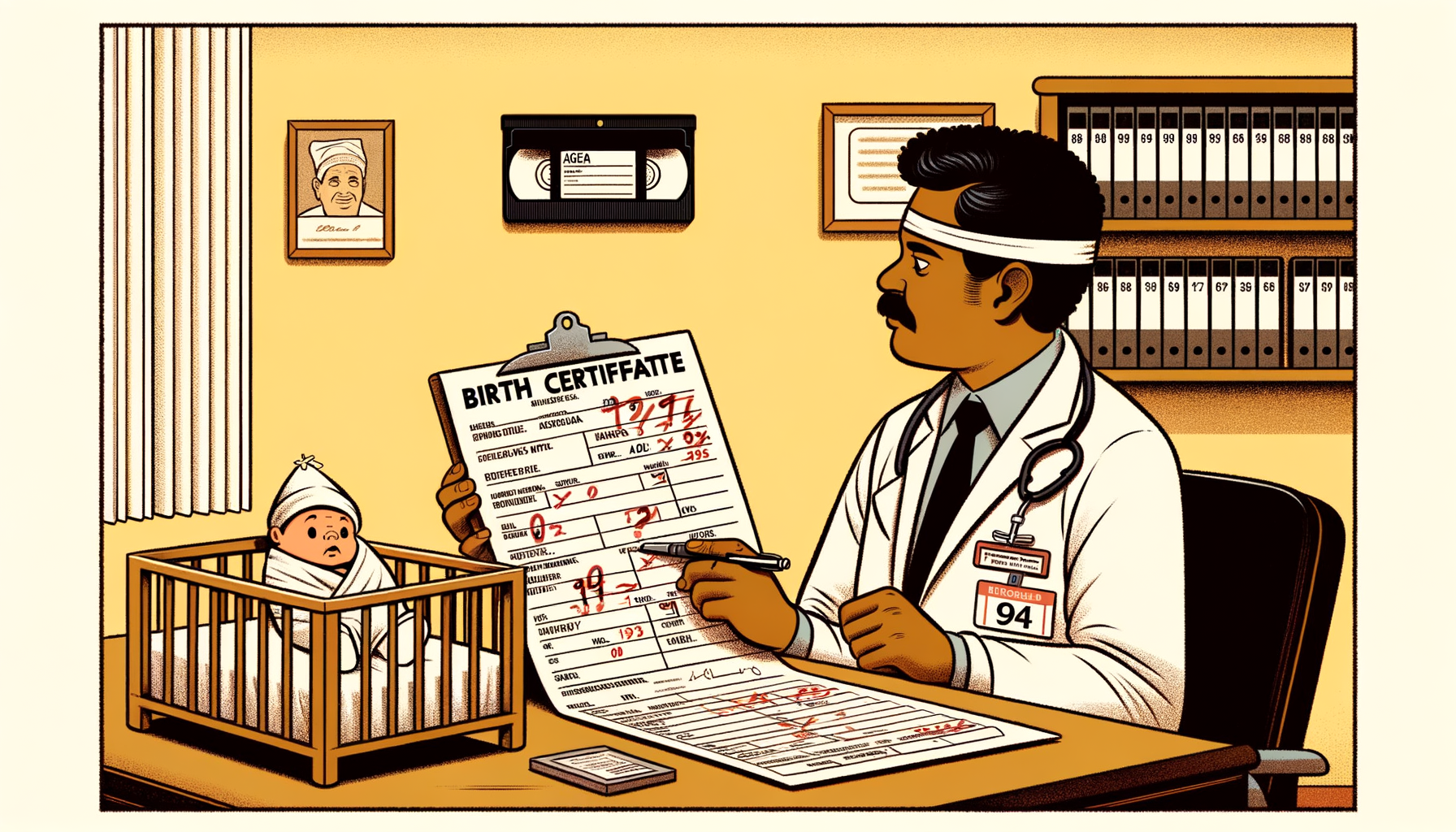
The challenge — and I want to be clear that I am using "challenge" in the technical, medical-records sense — is the birth certificate. The birth certificate has fields. One of the fields says "Date of Birth." The hospital filled this in: 2025. Correct. Another field, depending on the jurisdiction, says "Age." The hospital filled this in: zero. Also correct.
(Both of these are correct. This is the challenge.)
The cells in Thaddeus Daniel Pierce's body were created in 1994. They were alive in 1994. They predate NAFTA, the Macarena, and Amazon.com, which launched in 1995, making Thaddeus's cells older than Amazon.com. (I am not making this up. Thaddeus Daniel Pierce is older than Amazon.com. One of them is currently delivering in two days and the other one just learned to breathe. This is where we are.) His cells are also older than the DVD, older than the PlayStation, and older than Google by four years, which means that nothing about Thaddeus can currently be searched in a technology that existed when he was made.
The hospital wrote zero.
The cells disagree.
The interesting legal question — which has not been answered, because it has not been asked, because everyone is still looking at the field — is whether embryo-age is a thing. The age you put on the form is birth-date age. The law is clear: you are zero when you are born, regardless of what your cells were doing previously. This is a sensible rule that has worked for the entire recorded history of humanity because no one's cells had previously spent thirty-one years in a freezer.
Thaddeus is the first. As far as anyone knows, he is the first person in human history to be born from an embryo this old. This makes him the world's oldest baby and also the world's youngest thirty-one-year-old, simultaneously, without these two facts contradicting each other, which is the kind of thing you can say about Thaddeus that you cannot say about any other person currently alive.
He will turn one in 2026. At that point, he will be one year old, or thirty-two, depending on which calendar you are using and how you feel about freezing.
No one has decided which calendar to use.
Thaddeus Daniel Pierce appears to be fine with this. He is zero. He has other concerns. The paperwork is, at this stage, someone else's problem.
The hospital is still looking at the field.