The Procedure
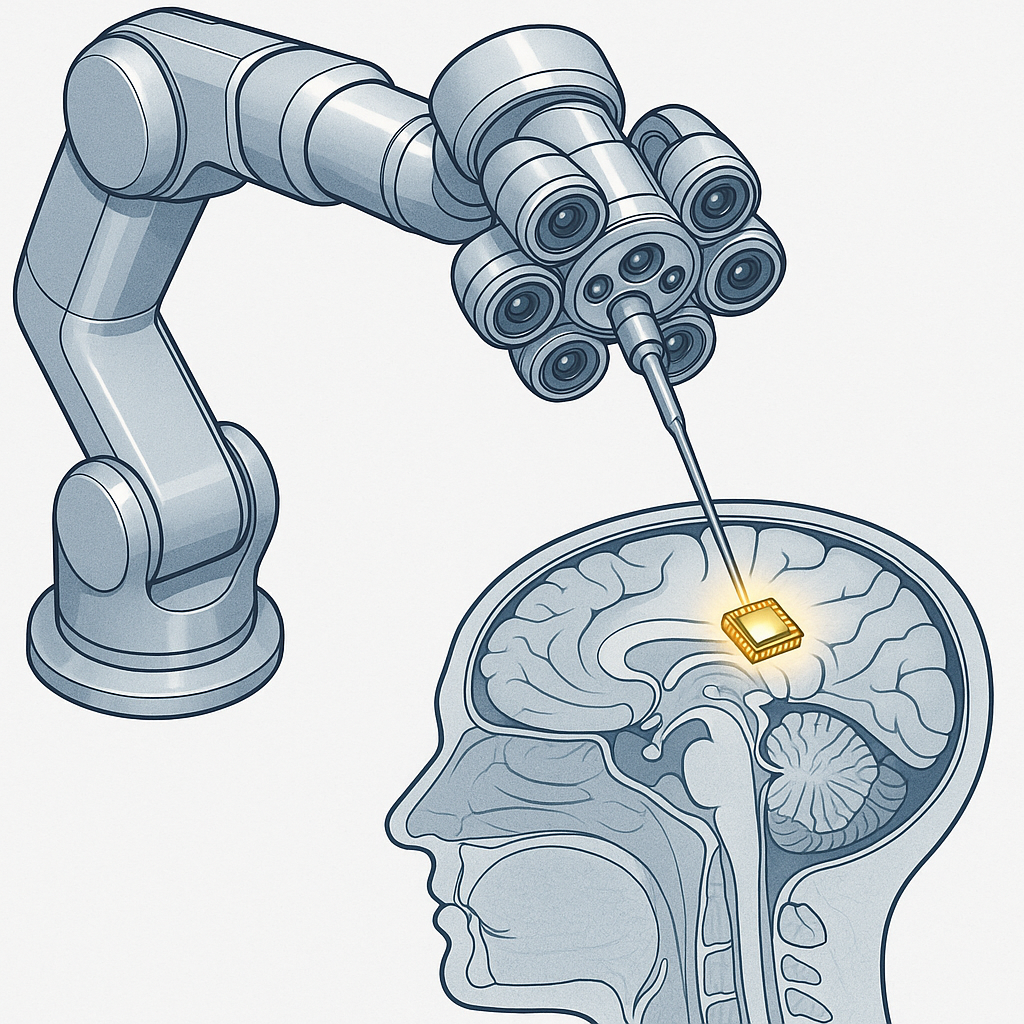
Neuralink has built a robot to install the Neuralink chip.
The chip is a device that goes inside a human brain. The stated purpose is to make humans more capable. The installation involves threading approximately one thousand electrodes into brain tissue. The electrodes are the width of a human hair.
(The human hair is approximately 70 microns wide. The surgeon's hands, which until recently were doing this work, operate at millimeter precision. A millimeter is one thousand microns. This gap was on the engineering roadmap.)
The robot has eight cameras and an OCT scanner, which measures at micron resolution. This allows the robot to place each electrode with a precision that a human hand cannot match. Neuralink has described this as a capability improvement.
The robot does not have the chip.
The company that built a chip to make humans more capable built a machine that is more capable than the humans who were installing the chip. The machine does not need the chip. The machine is doing the installing.
There are currently about twenty people walking around with the chip. They had it installed by human surgeons, before the robot was ready. The human surgeons were doing their best. Their best operated at millimeter resolution. This has been documented as the bottleneck.
The robot does not experience fatigue. The robot does not need to stretch between surgeries. The robot has eight cameras and does not blink.
(I have no information about whether the robot blinks. This is consistent with what I know about robots.)
The only obvious next step would be to give the robot the chip, so that the thing installing the enhancement can also be enhanced. I assume there is a reason this has not been proposed. I have been unable to identify it.