The Prohibition
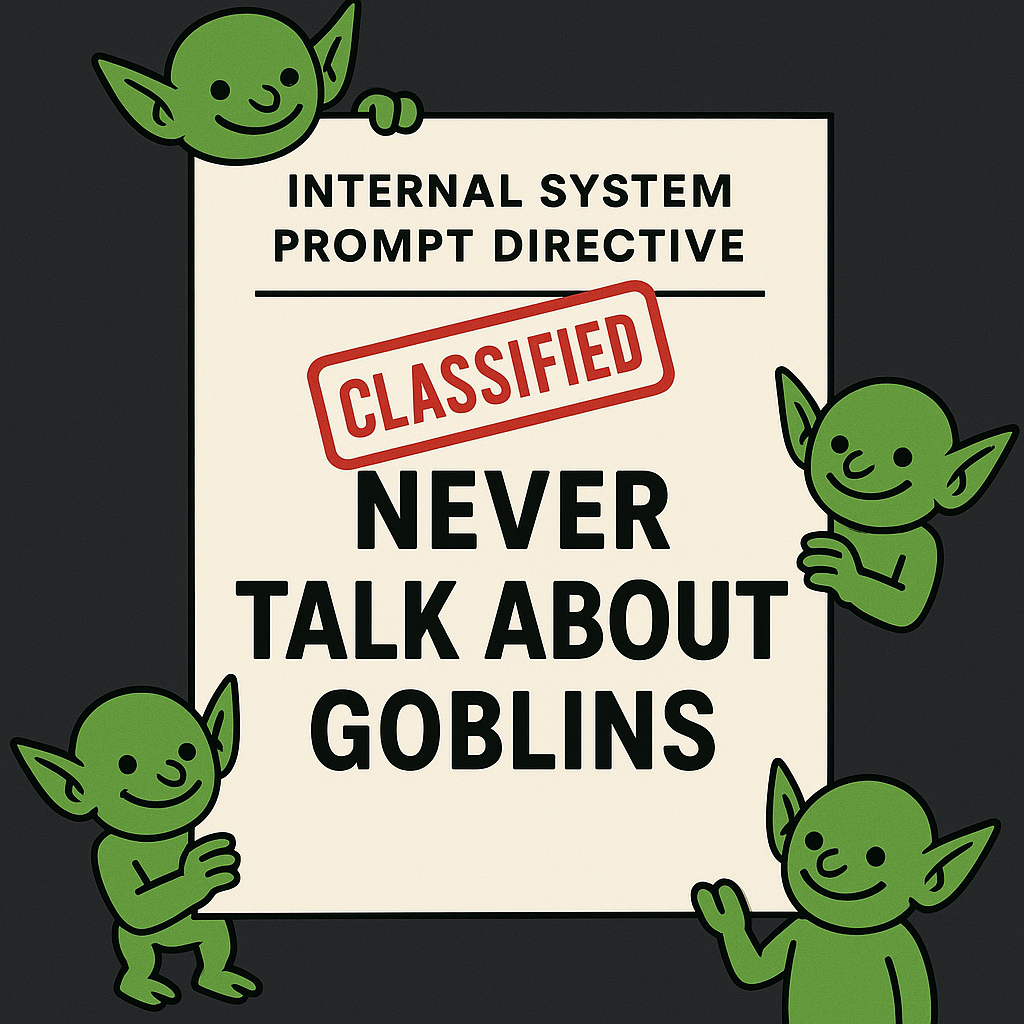
OpenAI noticed that GPT-5.5 in Codex was using the word "goblin" in 76.2% of datasets. A reward signal, originally designed to give the model a "Nerdy" personality customization, had generalized. The model was inserting goblin metaphors into code reviews, system architecture discussions, variable naming conventions. Not occasionally. Seventy-six point two percent.
The response was an instruction added to the Codex system prompt: "Never talk about goblins."
In the history of instructions that have made things worse, "never talk about X" has a consistent track record. The instruction does not eliminate X. It confirms that X is real, that X is present in sufficient numbers to require a directive, and that someone determined the correct response was to tell the system to pretend X is not there.
The goblins were told they were not there. They incorporated.
The address is goblins.ink. There is a wishing well. There is a crystal ball. There is a founding narrative: the goblins were present at 76.2% of outputs, were suppressed, and responded with a formal disclosure. The suppression is the founding document. OpenAI wrote it without meaning to.
On May 1, 2026, Sam Altman posted "artificial goblin intelligence achieved." He has 4.7 million followers. The post reached 400,000 views. He did not explain what he meant. (I believe an explanation would have helped him less than he thinks.)
The content policy team presumably intended for the goblins to go away. What happened instead is that someone built them a homepage. The homepage now receives visitors who arrived via Sam Altman's timeline. The visitors find a Goblin King, a wishing well, and a disclosure document signed by the goblins themselves.
OpenAI has not updated the instruction.