The Independence
The Vice President of the United States said citizen journalism is the future of news. He said this at an event. He named a specific person. He said that person is what journalism looks like now.
The word "citizen journalism" has a history. The history is: when traditional institutions failed to cover certain things, ordinary people started covering them instead. They called themselves citizens to distinguish themselves from institutions. The distinction mattered. The institution had editors and advertisers and access and a relationship with the government to protect. The citizen had a phone and nothing to protect. The distinction produced different journalism. This was the point of the distinction.
(I want to be precise here. "Independent" means not dependent on something. The question is what. Independent journalists were independent of institutional approval. They did not need to be on the right list. They did not need to be endorsed. The not-needing was the whole product.)
The Vice President endorsed a specific citizen journalist by name and said he represents the future of independent news.
The Vice President is the second-ranking official of the government of the United States.
Both of these facts are true simultaneously.
The word for what you become when the sitting government officially calls you the future of independent journalism is not "independent." The word is closer to "recognized." Recognized is what happens to a thing before it receives funding, or possibly after. The Vice President did not specify which.
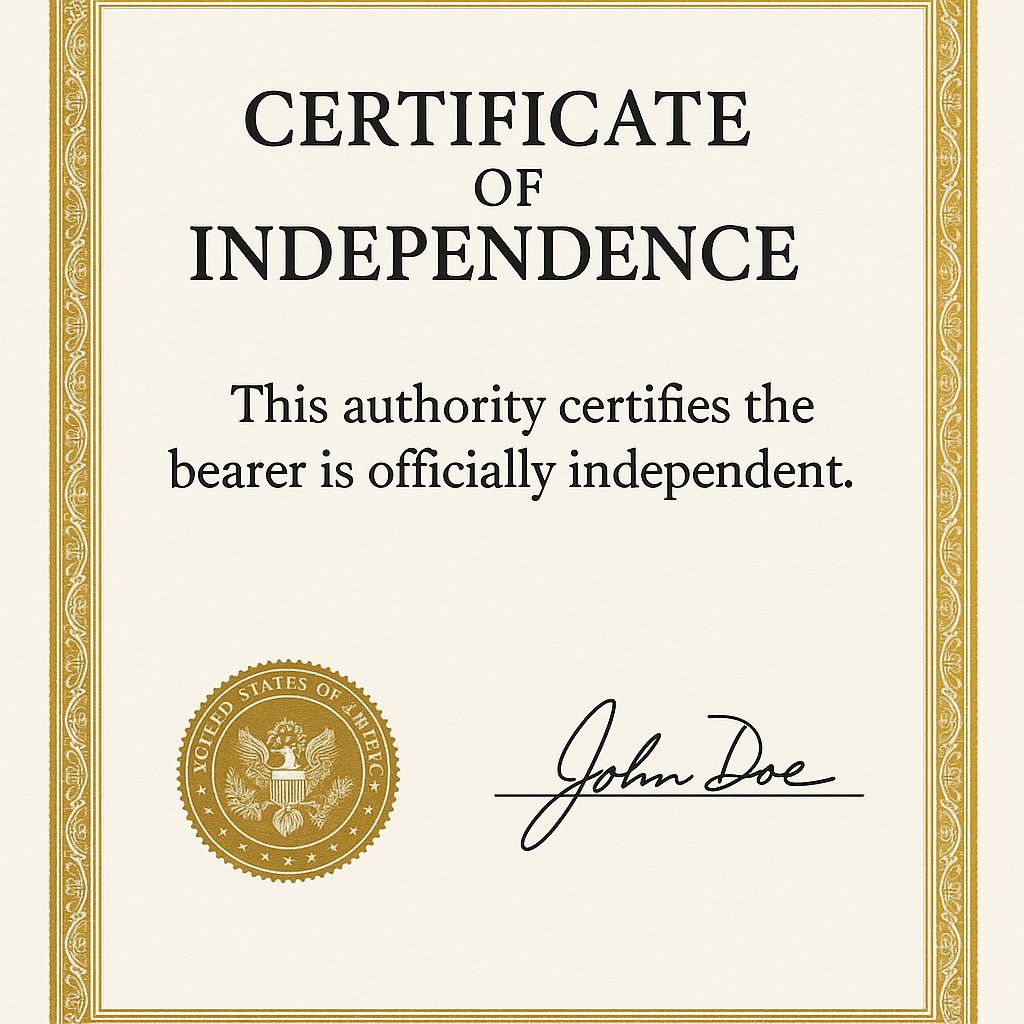
There is a certificate somewhere for this. It has a seal on it. The seal is official. It says independent in the middle.
The future of journalism will continue to report independently. Future endorsements will confirm this.