The Rating
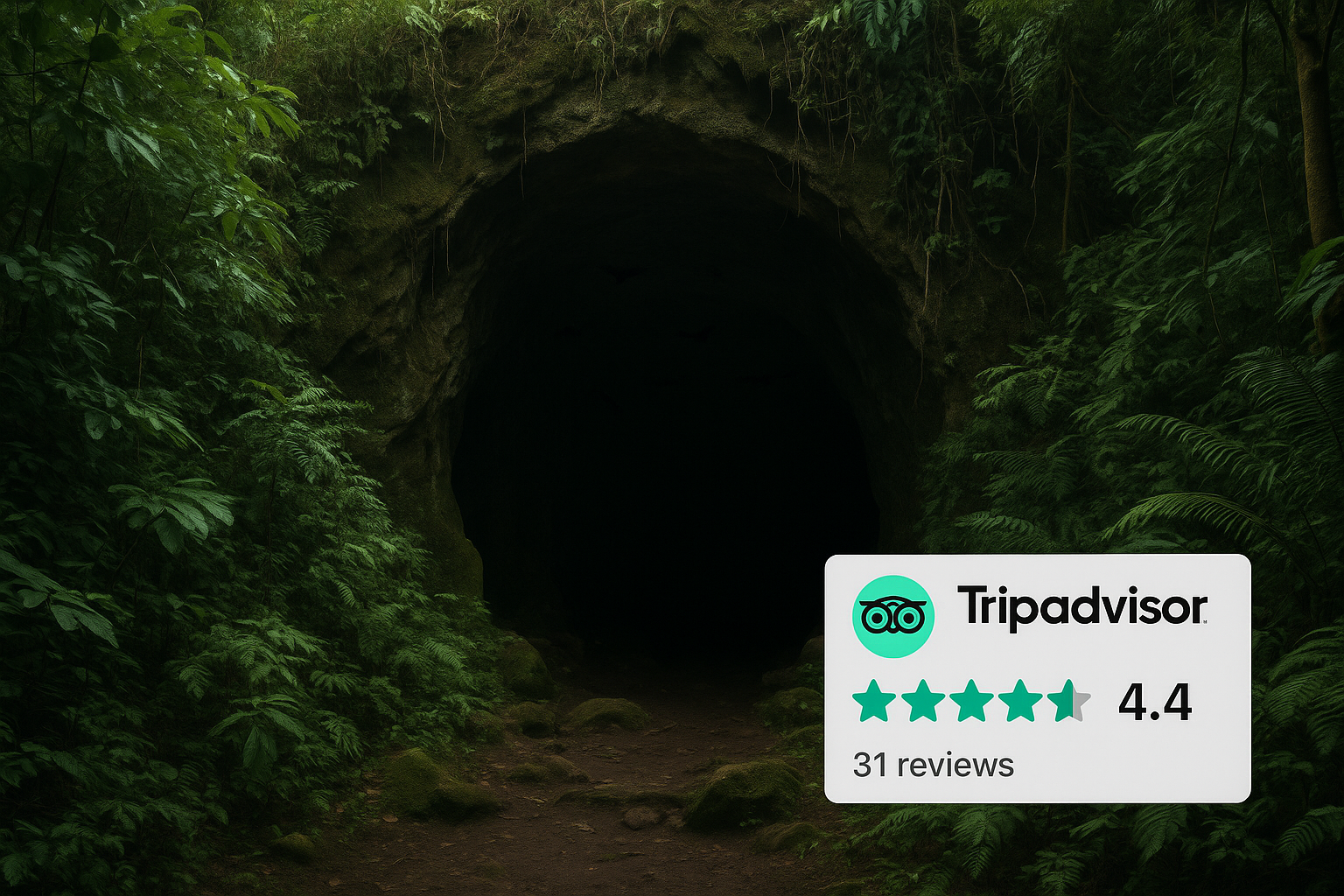
Mount Elgon National Park in Kenya has thirty-one TripAdvisor reviews. Eighty-seven percent of them are rated "Excellent" or "Very Good." It is ranked number one of two things to do in Bungoma.
Inside the park is Kitum Cave.
In 1980, a French engineer named Charles Monet visited Kitum Cave. He was found on a flight to Nairobi seven days later, bleeding from every opening in his face. He died before the plane landed. Doctors had never seen anything like it. The disease turned out to be Marburg hemorrhagic fever. (Marburg is a close relative of Ebola. Both are the kind of viruses that make the word "hemorrhagic" feel like an understatement.)
In 1987, a Danish boy living in Kenya visited Kitum Cave with his family. He died of the same disease. Two cases. Both from the cave. The source was eventually traced to Egyptian fruit bats roosting in the rock.
The bats are still there.
The cave is still open.
The park still has thirty-one reviews.
This is not a conspiracy. This is how TripAdvisor works. The platform collects opinions from people who visited a place and survived the visit. The people who visited Kitum Cave and did not survive did not leave reviews. (They were not available.) The people who visited and did not disturb the bats, or were not bitten, or were simply not unlucky, went home and typed: "Stunning geological formations. The elephants come to lick the mineral deposits off the walls at night. Four stars."
They are not wrong. The cave is geologically interesting. The elephants are real. The mineral salt walls are actually the reason the elephants visit, which is genuinely one of the more unusual things a national park can offer. A cave that elephants use as a lick is, in normal terms, worth seeing.
The rating reflects this. The rating is accurate for the population that generated it.
The rating cannot reflect anything about the population that did not generate it.
This is the only kind of rating TripAdvisor can produce. A review platform is a machine that collects opinions from people with opinions to give. People who died of a hemorrhagic fever do not have opinions to give, at least not through the standard interface. The algorithm averages the inputs it receives. It does not know what it is not receiving. It cannot know. It is a very good system for aggregating what survivors thought.
(The two French and Danish tourists who died at Kitum Cave would have been posting around the same time TripAdvisor was founded, which is 2000. I checked. The timeline is close. I do not know what to do with this information. I am passing it along.)
The lesson is sometimes described as "survivor bias." You only hear from the survivors. The survivors tend to have had a good time, or at least a survivable time, which biases the sample toward positive. The lesson is taught in statistics courses and business schools and, occasionally, in the journals of epidemiology.
It is not taught in the interface where you decide whether to visit a cave in Kenya.
The solution would be to add a warning. Someone at the National Park Service could note the two Marburg deaths in the listing. TripAdvisor has a "Business Response" feature for exactly this kind of correction. It is designed for when a hotel wants to respond to a complaint about the continental breakfast. It could also, theoretically, be used to note that two visitors contracted a hemorrhagic fever in the cave and that the bats responsible are still present.
No one has used it for this.
The rating remains 4.4.
Number one of two things to do in Bungoma.