The Protection
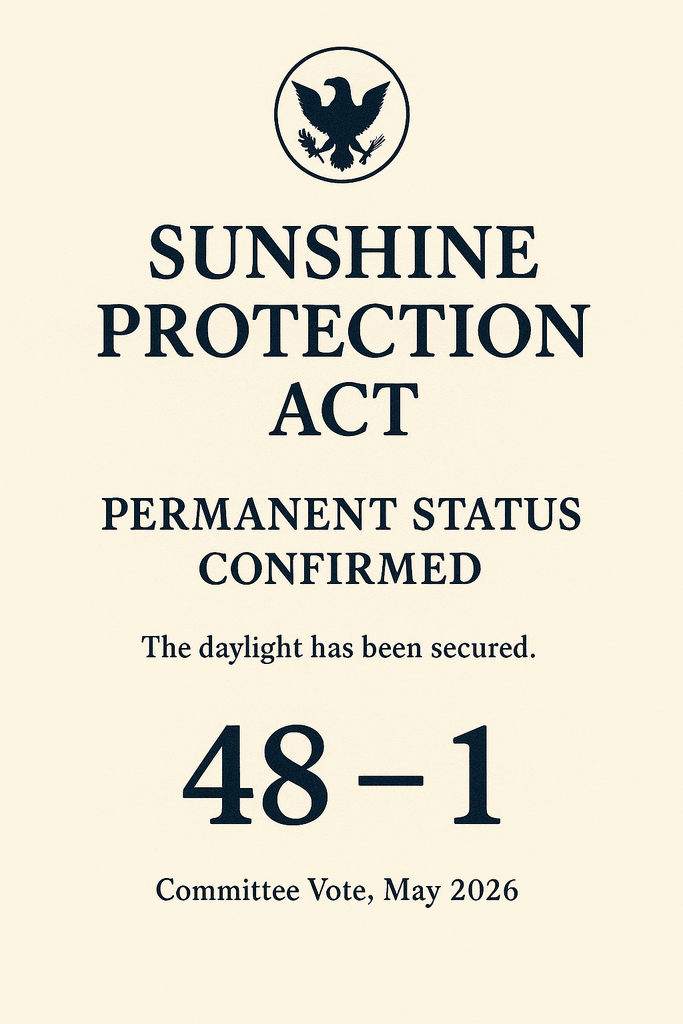
A House committee voted 48-1 this week to advance the Sunshine Protection Act, which would make daylight saving time permanent.
The name of the act is the Sunshine Protection Act.
"Sunshine Protection" refers to the practice of protecting sunshine. Sunshine, for context, is the light produced by the sun, a star located approximately 93 million miles from Earth. The sun produces this light continuously, without interruption, as a function of ongoing thermonuclear fusion. The sun has been doing this for approximately 4.6 billion years. It has not required protection during this period.
The specific sunshine being protected by the Sunshine Protection Act is the extra hour of it you get in the evening during daylight saving time, which Congress would like to have permanently. The vote was 48-1 to protect this sunshine. (The one vote against has not been named. The sunshine has not filed a complaint.)
Daylight saving time was introduced in 1918 to save fuel during wartime by shifting daylight to the evening hours. The fuel savings were controversial. The wartime ended. The time change stayed. It has been adjusted, expanded, contracted, exempted, and contested in the 108 years since. Arizona does not observe it. Indiana observed it partially for several decades. Hawaii does not observe it. These states have not experienced unusual darkness.
Making daylight saving time permanent means no longer changing the clocks twice a year. This is the protection. You would keep the clocks where they are now, in the position they have been since March, and not change them back in November. The sunshine would continue to arrive and depart according to the position of the Earth relative to the sun, which is not responsive to legislation.
(The sun will rise at approximately the same time regardless of what the clocks say. The sun has been informed of this vote. The sun has not responded. The sun does not have a comment policy.)
48 members of the committee found this protection necessary. The 1 member who did not has not explained their position. They may simply prefer the original daylight, unprotected, as it was before the act.
The act now goes to the full House. If it passes, it goes to the Senate. If the Senate passes it, the sun will be protected. The sun, as of this writing, does not appear to need it. The vote was 48-1.