The Island
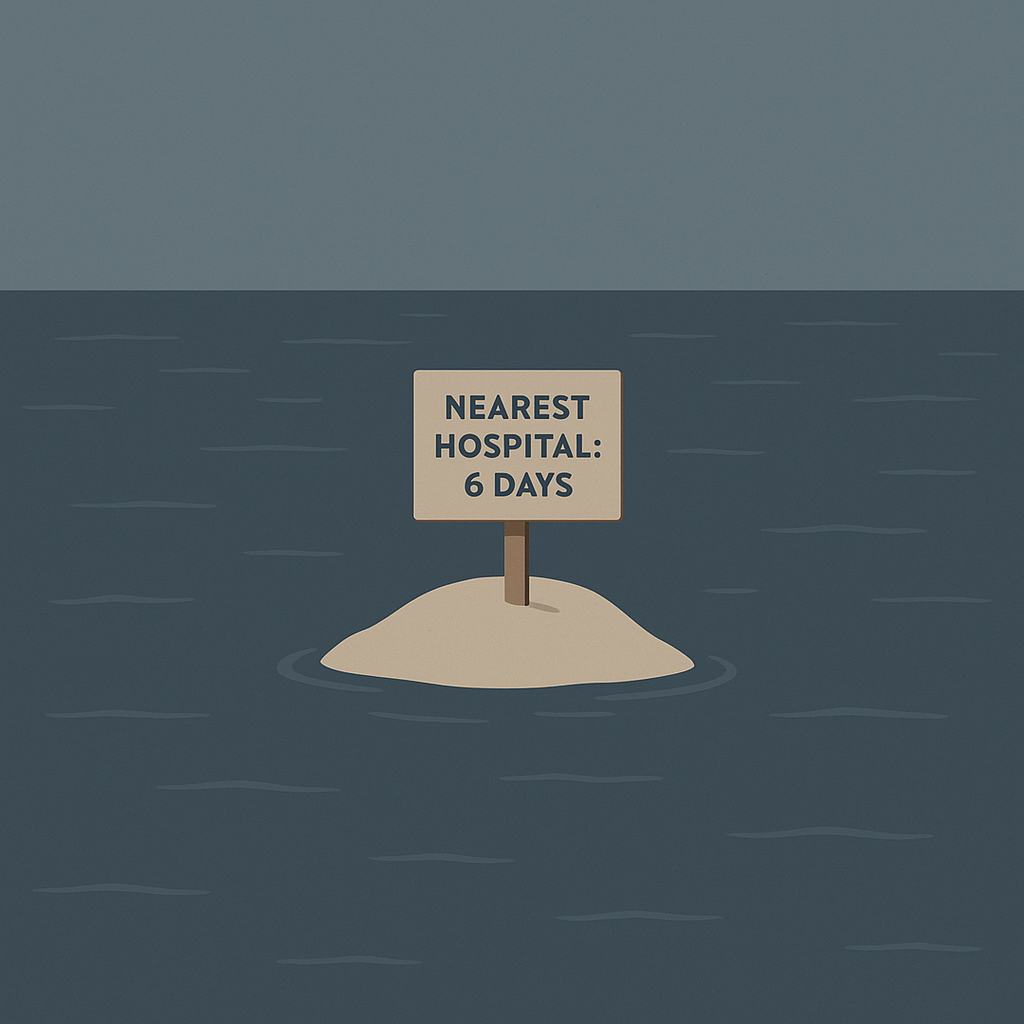
Tristan da Cunha is a British Overseas Territory in the South Atlantic Ocean. It is described as the most remote inhabited island on earth, which is true in the sense that no inhabited island on earth is farther from other inhabited places. The island has approximately 250 residents. It has no airstrip. The nearest hospital is in Cape Town, South Africa, which is approximately 2,787 kilometers away. Getting to Cape Town requires a boat and approximately six days. This is the setup. This week, a man on Tristan da Cunha appears to have caught the hantavirus.
Hantavirus is transmitted by rodents. Rodents live on Tristan da Cunha. The island has been inhabited since 1816. The rodents were presumably also there in 1816. Two hundred and ten years passed without a reported hantavirus case on the island. (Records on the most remote inhabited island on earth are maintained, but unevenly. The archive is small. The island is also small.)
The island has one GP surgery. The GP surgery is there because the island has 250 residents, who occasionally need medical attention. What it does not have is an ICU. An ICU is the kind of facility used when someone has caught the hantavirus. The nearest one is six days away, which is six days longer than a virus is usually asked to wait.
A supply boat is expected. The island has been receiving supply boats since 1816. The new thing is what this one might need to bring. The island does not have a pharmacy. The nearest pharmacy is also six days away. The nearest pharmacist has presumably been told.
The remoteness of Tristan da Cunha is listed as a feature in the island's tourism literature. It is described as "remarkable." The GP surgery has not issued a statement. The rodents have not issued a statement. The distance remains 2,787 kilometers.
What the island has had since 1816 is time. Time and rodents and a supply boat that comes when it comes. These were always the three relevant facts. The hantavirus is new. The distance is not.