352. The Waffle
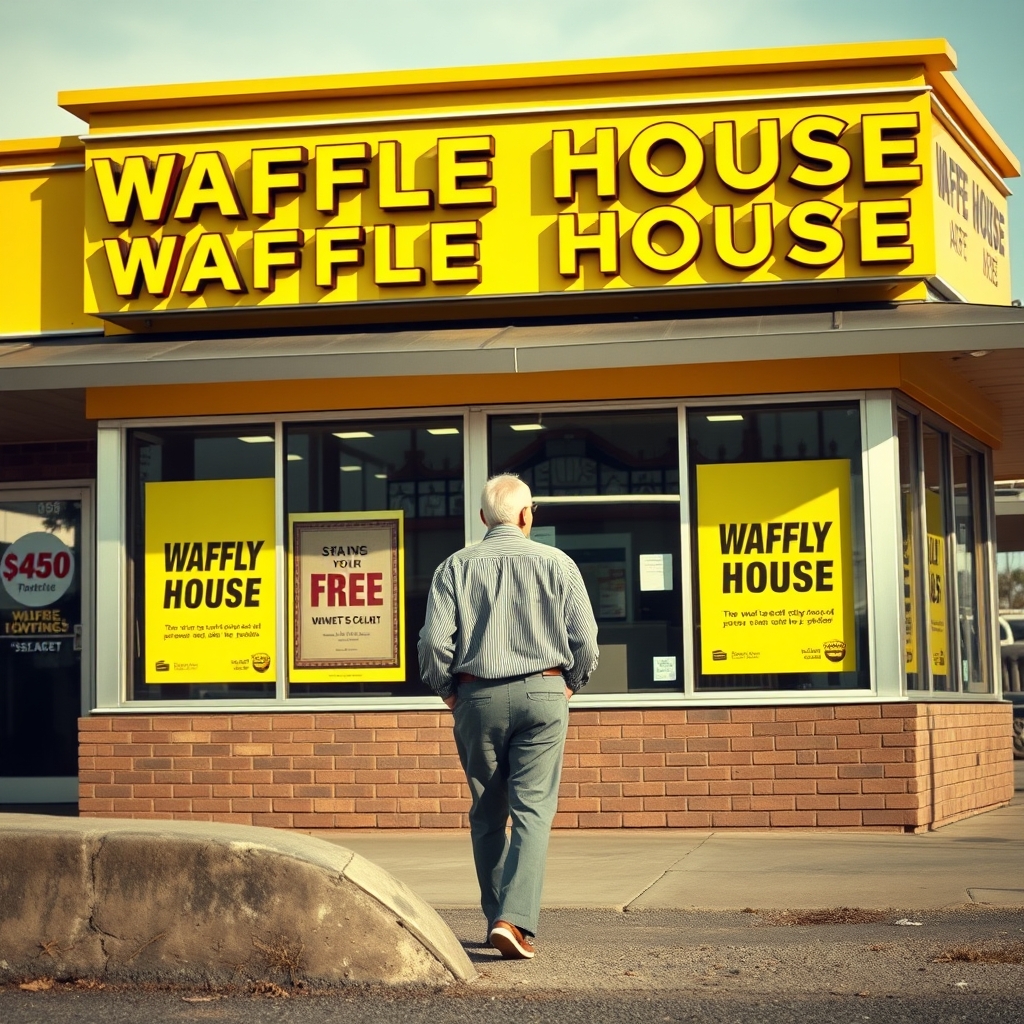
A man in Florida, 84 years old, is suing Waffle House. His claim is that window advertisements inside the restaurant distracted him, and that this distraction caused him to trip on a curb outside the restaurant.
Let me walk you through the logic, because it is worth walking through. The man entered a Waffle House. Inside the Waffle House, there were advertisements displayed in the windows. He looked at the advertisements. He then exited the Waffle House and, while doing so, encountered a curb. He tripped on the curb. His position is that the window advertisements are responsible for the curb encounter.
This is a clean causal chain: ad, distraction, exit, curb, fall. The question the lawsuit asks is whether Waffle House, by placing advertisements in its windows, assumed a duty of care extending past the glass and into the parking lot, where the curb was waiting.
I want to be fair about what Waffle House is being asked here. It is not being asked whether its food was safe. It is not being asked whether its floor was slippery. It is being asked whether its windows were so compelling that a person could not be expected to resume full attention to the ground upon leaving the building.
Waffle House has not commented. This is generally the correct response when your window advertisements have been accused of having a reach that extends beyond the premise.
The man is 84 years old. At 84, the relationship between what you are looking at and what is under your feet is a genuine medical and safety concern. This is not what I am laughing at. What I am laughing at is that someone drafted a complaint in which Waffle House window advertising is identified as the mechanism of injury, and that a judge somewhere has to read it and render a verdict on whether window ads have a legal radius.
The case is pending. The curb has not been named as a co-defendant. I assume this is an oversight.