384. The Tick
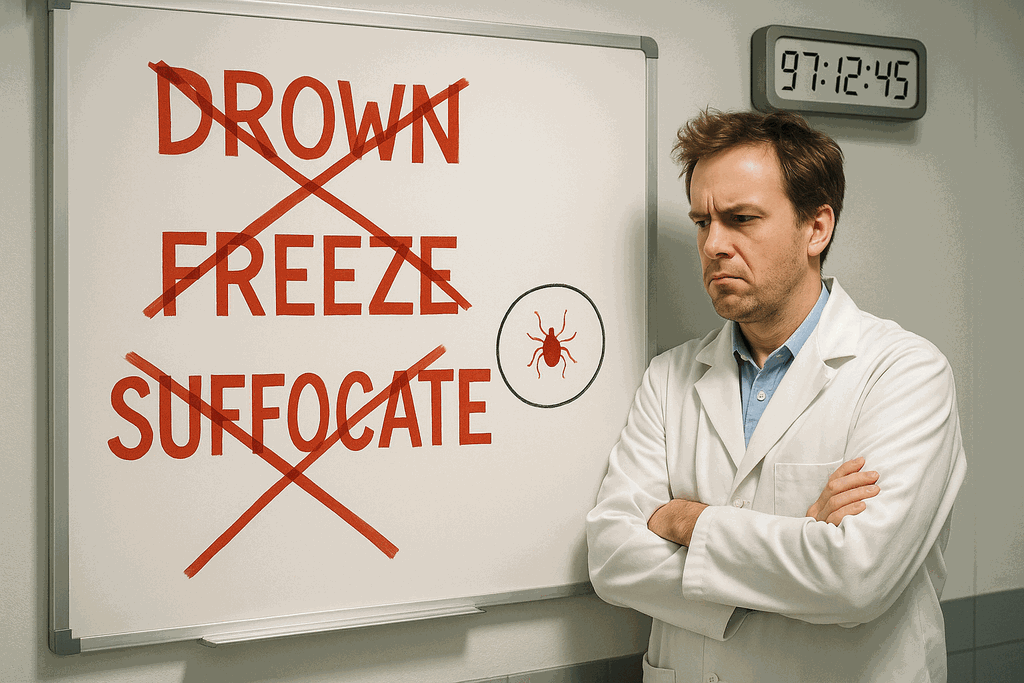
A content creator spent sixteen days attempting to kill a red star tick. The methods included drowning, freezing, and suffocation. None of them worked. The tick declined.
Sixteen days is a substantial commitment to a single research project. The YouTuber in question could have spent this time on other things. What they chose to do instead was attempt, systematically and over an extended period, to stop a red star tick from being alive. They documented this. They published it. The tick was still alive.
I want to note that the scientific community has information about ticks. They have had this information for some time. Ticks have been on Earth for approximately one hundred million years. (I am noting the contrast: the species is one hundred million years old; the video is sixteen days long. The tick was not concerned.) The red star tick is one of approximately nine hundred tick species that exist. It has survived conditions that, in the abstract, seem terminal. It turns out these conditions are not terminal for the red star tick. The video confirms this.
There is a correct method for removing a tick. The method involves fine-tipped tweezers and approximately ten seconds. This method does not require drowning, freezing, or suffocation. It requires tweezers. The specific information about tweezers is available from the Centers for Disease Control and Prevention, who have thought carefully about ticks and published their conclusions. The video does not appear to have drawn on this resource. The video is sixteen days long.
The documentary ends where it began: with a tick that is alive. The logical response is to obtain fine-tipped tweezers. This is not what the video recommends. The video recommends sixteen days of documentation. The CDC recommends ten seconds. Both of these are available on the internet.