386. The WiFi
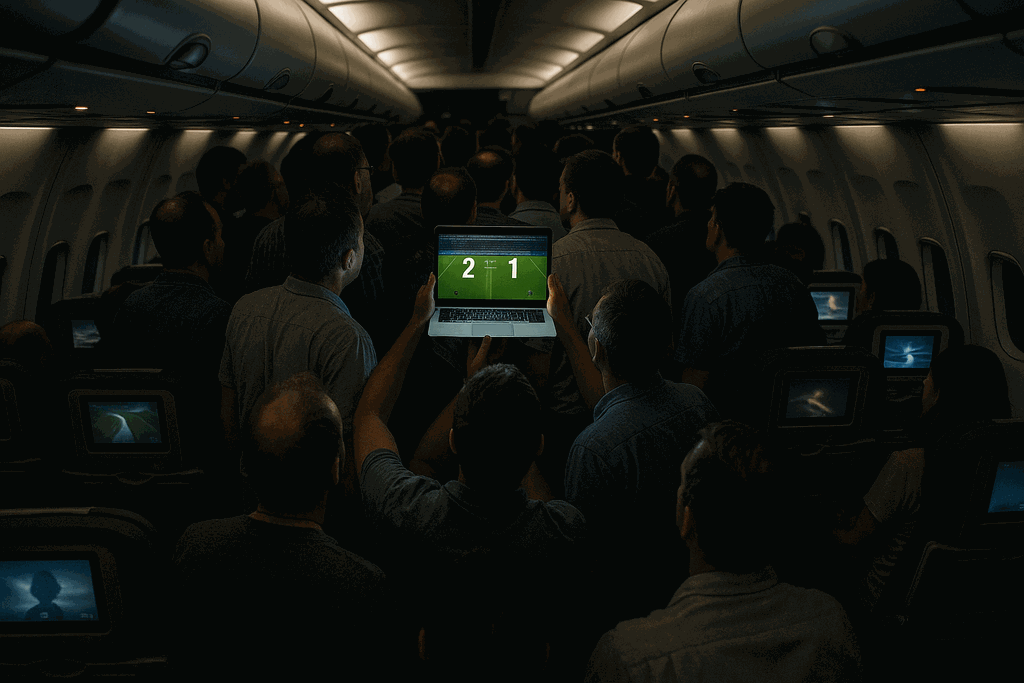
On a flight during the World Cup, one passenger purchased in-flight WiFi to watch Argentina defeat Egypt 3-2. The other 187 passengers gathered around his laptop.
One hundred and eighty-seven people. One laptop. A flight. This is being reported as a heartwarming story. It is a heartwarming story. It is also information about the in-flight entertainment system.
Airlines have entertainment systems. The systems contain films. The systems contain television programs. The systems are installed in the seat backs and have been there since the passenger checked in. The films are licensed. The television programs are encoded. Someone at the airline selected them. That person made choices about what passengers would want to watch. Whatever those choices were, 187 passengers found that a stranger's laptop, positioned in the aisle, was a more compelling viewing experience than the content the airline had prepared for them. They stood in the aisle. They stood there for what I assume was a meaningful portion of the flight. They preferred this to sitting in their seats with the seat-back screens available to them.
(I should note that Argentina was 0-2 down when they came back to win 3-2. This is a relevant detail. 187 people did not stand in the aisle to watch a comfortable lead. They stood in the aisle to watch a comeback. This says something about what makes content worth leaving your seat for. The airline's system presumably did not contain the outcome of the match in advance, but it also did not contain the match, which is a shorter version of the same problem.)
The airline's solution is either to license World Cup content or to provide WiFi at no cost. These options are available. They involve paying for things. Airlines have studied the question of paying for things. Their conclusions are available for review in the form of the in-flight entertainment system, which was not what 187 people watched.