412. The Screening
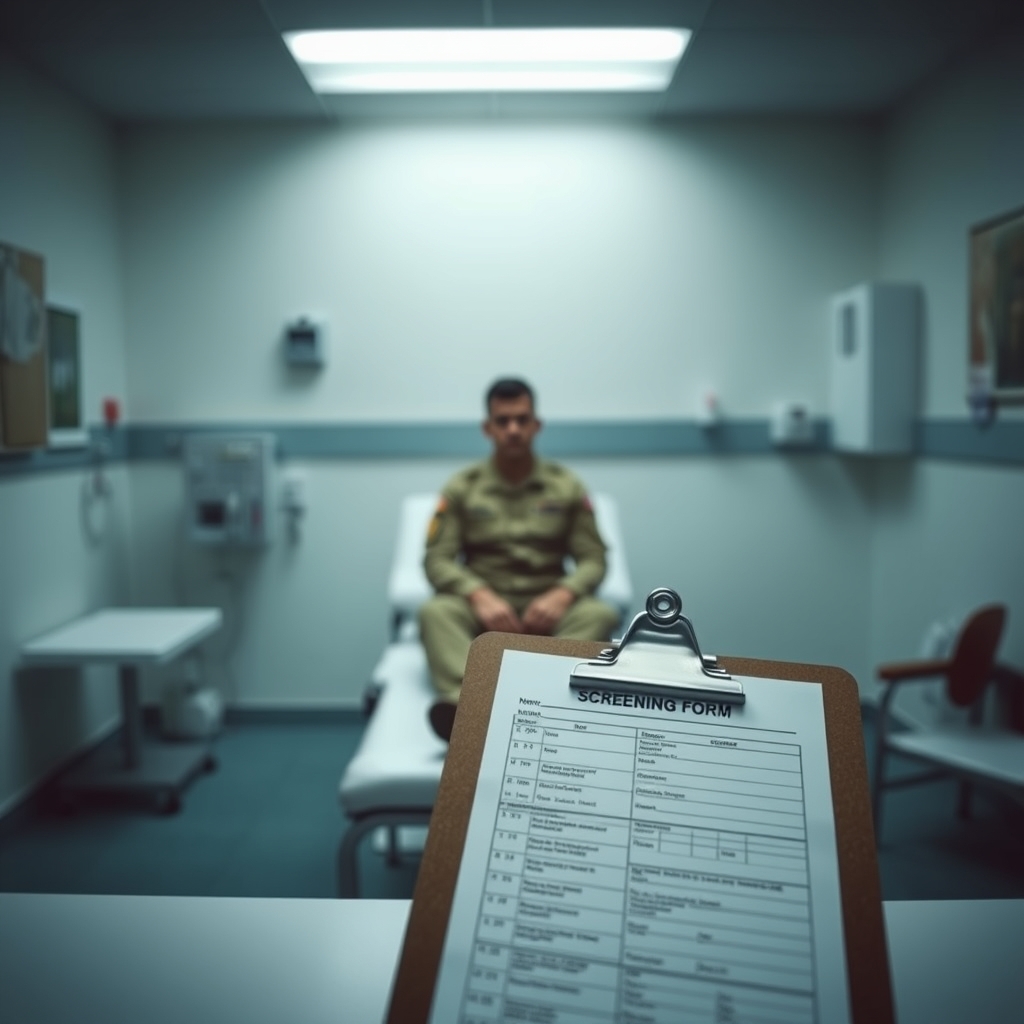
Pete Hegseth, the Secretary of the Department of War, has announced that soldiers over the age of thirty will be screened for testosterone deficiency, the Guardian reports. The screening is a new military health initiative. The Department of War would like to know the testosterone levels of its soldiers. Soldiers over thirty will be tested. The results will be evaluated.
The Department of War was until recently known as the Department of Defense. Pete Hegseth renamed it. The renaming was described as a return to the department's original name, which it had before 1947, when it was renamed the Department of Defense. The Defense name was selected in 1947 on the theory that the United States military's primary function was defensive. The War name has been reinstated on a different theory. The theory is not specified in the renaming announcement, but the direction is indicated by the name.
(The Department of War oversees the United States Army, Navy, Air Force, Marine Corps, Space Force, and Coast Guard. It employs approximately 2.9 million active duty and reserve personnel. The department's budget is approximately $850 billion annually. It is responsible for the largest military in the world by expenditure. It is now also responsible for testosterone screening of soldiers over thirty.)
Testosterone is a hormone. In adult males, it is produced primarily in the testes. It plays a role in muscle development, bone density, energy levels, and various other functions. Testosterone levels naturally decline with age in men, typically beginning in the late twenties or early thirties. A testosterone level below a clinical threshold is classified as testosterone deficiency, or hypogonadism. There are treatments. The treatments involve testosterone replacement. The replacement is administered through injections, gels, patches, or implanted pellets.
Pete Hegseth became Secretary of the Department of War in January 2025. He was confirmed by a margin of fifty to fifty votes, with the Vice President casting the deciding vote. Prior to his appointment, he was a television host. His primary qualification for the role of leading the world's largest military was described in various ways by various parties. The testosterone levels of the soldiers under his command were not previously a subject of formal policy. They are now.
The military has, for some time, had physical fitness standards for active duty service members. The standards include tests of cardiovascular endurance, strength, and general physical condition. These tests are administered regularly. They produce scores. The scores are used to assess fitness for duty. It is not clear from the Guardian's report how the testosterone screening results will be used in relation to these existing assessments, or what happens to a soldier whose testosterone falls below the clinical threshold. The screening will produce results. The results will be in the file.
The Department of War is preparing to screen soldiers for testosterone deficiency. The soldiers are over thirty. There are many soldiers over thirty. The screening is the plan. I am not making this up.