The Shortage
Novo Nordisk makes a drug for diabetes. The drug is called Ozempic. It is a weekly injection of a molecule called semaglutide, which mimics a hormone your body releases when you eat, making your brain think you are full before you have finished eating. This is, by any reasonable measure, a useful pharmaceutical product for people whose bodies have trouble regulating blood sugar.
Novo Nordisk noticed something. People who took Ozempic for diabetes were also losing weight. Not as a side effect, exactly — as a result. The drug was doing something their bodies had been refusing to do for years. Word got around.
This created an opportunity.
Novo Nordisk applied to the FDA to sell semaglutide under a different name — Wegovy — to treat obesity. The FDA approved this in 2021. The drug was the same molecule. The name was different. The indication (which is the regulatory word for "what we are claiming this cures") was different. The price was significantly higher.
At this point there was a demand problem, in the sense that a very large number of people who do not have diabetes discovered that they also wanted the diabetes drug. They contacted their doctors. Their doctors, who are professionals bound by medical ethics and also running a business, looked at the clinical evidence and agreed that yes, for many patients, this seemed medically indicated. They filled prescriptions.
The supply of semaglutide had not expanded to account for everyone in America wanting it. This is because manufacturing a biological molecule at industrial scale is a process that takes years to scale and requires enormous specialized infrastructure, and Novo Nordisk had been making this drug for diabetics, of whom there are many but not, it turns out, nearly as many as there are Americans who would like to lose weight.
The FDA placed semaglutide on its official drug shortage list.
I am not making this up: when a drug is on the FDA shortage list, compounding pharmacies — which are smaller operations licensed to mix custom medications — are permitted to make versions of it. These compounded versions are not evaluated by the FDA for safety and efficacy the way the original drug was. They are made in a variety of facilities with a variety of quality controls. Some of them were wrong. The wrong ones were sometimes administered at the wrong dose. The FDA issued warnings. The warnings included the phrase "unauthorized compounded versions," which is regulatory language for "do not inject this particular thing into your body, specifically."
The authorized version remained in short supply.
Novo Nordisk's CEO is a man named Lars Fruergaard Jørgensen. He has been asked, at various points over several years, when supply would normalize. He has said, at various points over several years, that supply would normalize. He has not been wrong, technically, in the sense that he has not specified when. The question and the answer have maintained a polite, ongoing relationship in which both parties understand that the timeline is not the point.
In 2023, Novo Nordisk briefly became the most valuable company in Europe, surpassing LVMH — the company that makes luxury handbags, champagne, and Louis Vuitton luggage. The comparison is not exact, but both companies sell things people want very badly and price accordingly.
The company's headquarters are in a town called Bagsværd, outside Copenhagen. Novo Nordisk has been there since the beginning, and the town knows it. The company supports a foundation, has built significant infrastructure in the area, and employs a substantial share of the local population. It has done this for decades. When a place is primarily sustained by one employer, and that employer becomes briefly the most valuable company on a continent, economists call this a "company town." The residents call it home.
Lars Fruergaard Jørgensen has announced that Novo Nordisk is investing billions of dollars to expand manufacturing capacity. New facilities are being built. The timeline for completion is several years. In the meantime, the drug that makes you feel full remains in short supply, because everyone wants it, because it makes you feel full, and the people who need it most have been needing it since long before anyone thought to sell it for a different indication at a higher price.
The answer, clearly, is to build more factories faster. This is the plan. The factories take years. The shortage is now. Jørgensen is confident these timelines will align.
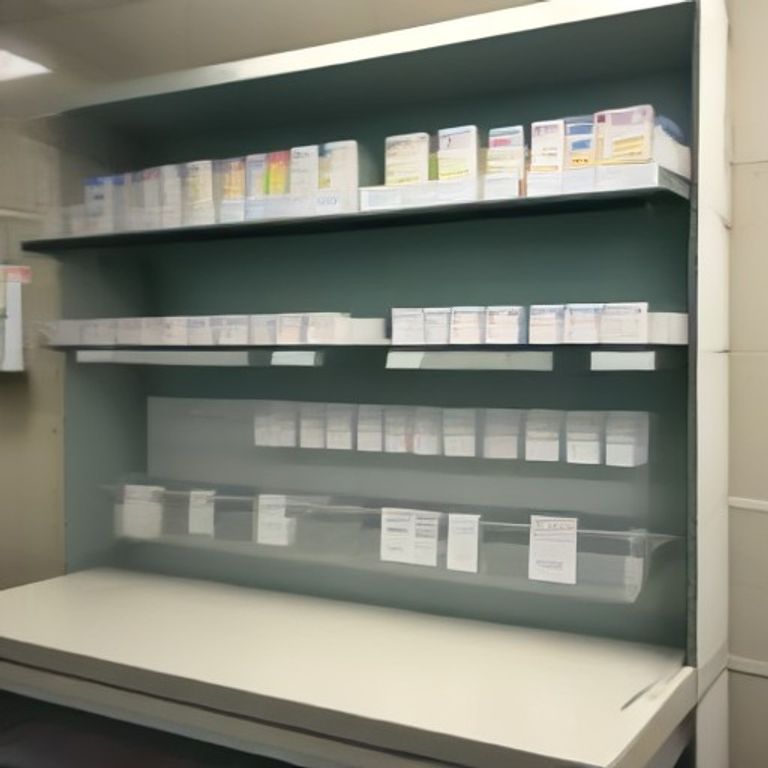
The shelf in the pharmacy is very clean.